
Software-defined advanced reactors for industrial heat and firm power.

A reactor platform
for the industrial
economy.

Thorium Atomics is developing the Tesseract TGR, a high-temperature gas reactor platform designed to deliver firm electricity, 750 °C industrial heat, and a more resilient long-term fuel pathway enabled by thorium supplementation.

Design posture

Start practical.
Build resilience.

LEU-based seed architecture for near-term practicality. Thorium-bearing blanket regions for long-term fuel resilience. Simulation-led engineering to compress learning cycles before hardware. Aimed at the parts of the economy electrification alone cannot reach: heavy industry, critical infrastructure, and advanced manufacturing.

01Platform

High-temperature gas reactor for firm power and industrial heat.

02Heat target

750 °C design target. Heavy-industry use cases electrification cannot reach.

03Fuel pathway

LEU-based seed with a thorium-capable pathway for long-term fuel diversification.

04Development

Simulation-led engineering, analysis, and compliance workflow.

01
The opportunity

Electricity is only part of the energy problem. Industrial heat is the harder one.

Most decarbonization strategies focus on power generation. But a large share of the industrial economy runs on high-temperature heat, not electrons alone. Above 400°C the list of practical clean solutions becomes much shorter. Above 700°C, it narrows further.

Temperature →Clean options become scarcer
< 150 °CLow-temp heatHeat pumps and resistive electrification are increasingly viable.
150–400 °CMid-temp heatClean solutions exist, but scale and cost remain uneven.
400–700 °CHigh-temp heatFew credible clean options at industrial scale.
= 750 °CTesseract TGRDesigned for the gap others avoid.

Our posture is to start with what is practical and build toward what is more resilient: an LEU-based seed architecture for near-term practicality, thorium-bearing blanket regions for long-term fuel diversification, and simulation-led engineering to compress learning cycles before hardware.

02
The platform

One reactor platform. Three strategic outcomes.

The result is not a single-product reactor story. It is a broader energy platform designed for power, process heat, and strategic isotope production.

I · Dispatchable electricity
Firm power

Clean, around-the-clock electricity for grids and industrial sites.

Designed for grids, industrial sites, and energy-intensive infrastructure that cannot depend on intermittent supply alone.

~90–100 MWeElectric output target
II · High-temperature thermal
Industrial heat

750°C helium for heavy industry, fuels, materials.

A thermal output shaped for loads that electrification alone does not solve elegantly at scale: chemicals, cement, ammonia, hydrogen, desalination.

750 °CDesign target
III · Long-term supply
Fuel resilience & strategic isotopes

Practical LEU seed. Thorium-bearing blanket.

Improved long-term fuel utilization, stronger supply resilience over time, and a structural basis for strategically relevant isotope production as the platform matures.

Ac-225From thorium fuel cycle
03
Deployment

Designed for where high-value energy is needed most.

Compact, self-contained, and sited alongside heavy industry, adjacent to data center campuses, within utility and industrial corridors, or near the communities it serves.

Process heat for heavy industryHeat offtake · Industrial corridor

Process heat for heavy industry

750°C helium delivered directly to steel, cement, ammonia, hydrogen, and chemical production. Co-located with industrial facilities under long-term take-or-pay heat offtake agreements.

Temp range400–750°C
OfftakeHeat & steam
SitingInside fence-line
CounterpartyIndustrial operator
04
The reactor

Tesseract TGR

A high-temperature gas reactor designed around helium cooling, TRISO fuel, and physical simplicity.

01Reactor classHigh-temperature gas reactor (HTGR) platform
02Thermal output (target)220 MWth
03Electric output (target)~90–100 MWe
04Outlet temperature (target)750 °C+
05CoolantHelium (inert, single-phase)
06Fuel formTRISO-based architecture
07Core conceptLEU seed with thorium-bearing blanket regions
08Primary applicationsFirm power · Industrial heat
09Design life (target)60 years
10Strategic extensionAc-225 / Th-229 isotope pathway
04.1 · Safety principles

A reactor architecture shaped by physical simplicity.

Negative reactivity feedback

As temperature rises, reactivity falls, reinforcing stable operating behavior.

TR
TRISO fuel

Particle-level containment and high-temperature material performance central to the safety case.

He
Helium coolant

Inert and single-phase. Avoids chemical and thermodynamic complications of alternative coolants.

Passive principles

Physical responses to off-normal conditions rather than reliance on active intervention alone.

04.2 · Fuel strategy

Practical in the near term. Strategic in the long term.

The TGR is being designed around a practical starting point: conventional low-enriched uranium in the seed region, paired with thorium-bearing material in the blanket. This grounds the reactor in a fuel pathway that is conventional, proven, and industrializable, while creating a framework for improving fuel utilization over time as the thorium cycle contributes more meaningfully to core performance.

The same architecture also creates a path toward dual-purpose fuel and isotope-breeding channels over time, allowing the platform to support both energy production and strategically relevant isotope pathways within one reactor system.

Over the longer term, as the thorium cycle contributes more meaningfully, the same pathway supports reduced long-lived waste inventory and inherent proliferation-resistant features stemming from the isotopic profile of the fuel and the TRISO fuel form.

Fig. 01 · Simplified sectional concept
He in · 260°C750°C+ outletPressure vesselforged steel, integralTh-232 blanketTRISO, reflector regionLEU seed zoneTRISO particleslow-enriched UPebble discharge path
05
Software

Iteration before hardware.

The reactor is the first product. The engineering platform behind it is designed to scale beyond it. Thorium Atomics is developing Mjolnir StudioTM, a simulation-led engineering environment that compresses iteration, strengthens traceability, and supports faster movement from concept toward regulator-aligned licensing workflows.

Computational reactor development

Run large volumes of design iterations before hardware is built.

Traditional reactor development has been defined by slow iteration, fragmented workflows, and documentation burdens that compound over time. Thorium Atomics is building a different model: a digital stack connecting reactor design, parametric analysis, performance modeling, and compliance in one environment, with outputs organized to support future NRC/CNSC-aligned licensing workflows.

Integrated workflow

Engineering, simulation, and structured compliance logic.

Built to support faster design refinement, deeper scenario analysis, and tighter linkage between engineering decisions and licensing logic.

Mjolnir StudioTM

The TGR is the first application. The platform can extend beyond it.

Mjolnir is designed to support future reactor development workflows, not one concept in isolation.

Why it matters

See tradeoffs sooner.

Run tradeoffs earlier, preserve design rationale, and build a stronger bridge between technical iteration and institutional review.

The broader thesis

Not only designing a reactor. Designing the machine that helps build one.


06
What we have built

Substance before narrative.

Credibility is earned in layers: independent physics review, reproducible benchmarks, institutional engagement, and team depth.

External technical review

Independent review confirms the Tesseract concept is technically feasible.

Reviewed by academic experts in reactor physics and TRISO fuel systems.

Dr. Ayman Hawari, Texas A&M University
Benchmark reproduction

Internal simulation platform reproduces published reference and benchmark cases.

Used live to compare scenarios, refine architecture, and inform technical decisions.

Institutional engagement

Engaged with U.S. national laboratories, including Idaho National Laboratory.

Neutronics benchmarking scope in preparation.

Team & IP

Former TVA CEO on the board, direct thorium fuel cycle and HTGR fuel management experience, IP in progress.

Internal reporting framework designed to support future NRC/CNSC-aligned licensing workflows.

07
Who it is built for

Designed for customers with hard energy problems.

The common thread: customers whose energy demand cannot be solved elegantly by intermittent power alone.

Industrial heat

Industrial partners

High-temperature heat for chemicals, fuels, materials, desalination, and other energy-intensive processes.

Firm power

Utilities and infrastructure

Firm, dispatchable power for grids facing reliability pressure, load growth, and decarbonization demands.

Long-duration compute

Data centers and advanced computing

Long-duration clean power for facilities where uptime, energy density, and resilience matter.

Sovereign capacity

Public-sector and strategic programs

A platform aligned with industrial competitiveness, energy security, and long-horizon fuel resilience.

08
Why now

A founding moment for industrial heat and fuel sovereignty.

Energy abundance precedes national power. Industrial heat, not electricity alone, is the foundation of manufacturing.
The Energy Imperative · Thorium Atomics
Strategic briefing · 2026.01

The Energy Imperative

A broader strategic paper on industrial heat, fuel resilience, and long-horizon energy sovereignty. Sets out the industrial and policy context behind Thorium Atomics’ work.

Our reactor pathway begins with low-enriched uranium, the fuel already licensed, qualified, and industrialized at scale. The broader aim is not to displace the existing nuclear fuel system overnight, but to help diversify and strengthen it over time through a thorium-capable pathway.

Download briefing
Earthrise, NASAImage · NASA · Apollo 8 earthrise
09
Medical isotope pathway

A structurally embedded capability, not an afterthought.

Because the Tesseract incorporates thorium-bearing material within its broader fuel architecture, it can support a pathway toward Thorium-229 inventory over time, the precursor to Actinium-225, an isotope described by the National Isotope Development Center as transforming cancer treatment through Targeted Alpha Therapy.

We do not present isotope production as the primary reason to build this reactor. We present it as a strategically valuable capability structurally embedded in a platform designed to solve hard energy problems first.

Energy first. Strategic isotope value built in.

Isotope pathways
Fig. 09 · Partial decay chain · Th-232 → Ac-225
Th-232Thorium-23214.05 B yr · α
U-233Uranium-233 (bred)1.59 × 10⁵ yr · α
Th-229Thorium-2297,340 yr · α
Ra-225Radium-22514.9 d · β⁻
Ac-225Actinium-2259.9 d · α · target
During my life I have witnessed extraordinary feats of human ingenuity. I believe that this struggling ingenuity will be equal to the task of creating the Second Nuclear Era. My only regret is that I will not be here to witness its success.
Alvin WeinbergDirector, Oak Ridge National Laboratory (1955–1973)

The second nuclear era Weinberg described is not abstract. It begins with decisions made now, by people with the physics and the industrial will to build.

10
Leadership

Built by operators, engineers, and capital allocators.

Thorium Atomics combines reactor engineering, utility-scale operating experience, capital markets execution, and software-led development. The company is being built by people who understand both the technical rigor of nuclear energy and the institutional discipline required to bring it forward.

Jeff Lyash, Board Director
Jeff Lyash
Board Director

Four decades of nuclear and power industry experience. Former President and CEO of the Tennessee Valley Authority and of Ontario Power Generation, two of North America's largest nuclear-powered utilities. Prior senior leadership at Duke Energy, Progress Energy, and Chicago Bridge & Iron Power. Began his career at the U.S. Nuclear Regulatory Commission. Currently on the Board of Directors for Dominion Energy and Aecon Group.

David Kerr, Co-Founder & Chairman
David Kerr
Co-Founder & Chairman

Founder of Algonquin Power and a veteran builder of public-market energy platforms, he helped scale the company from its initial listing into a multi-billion-dollar infrastructure enterprise. Decades of experience in board governance, capital formation, strategic transactions, and long-horizon company building across regulated power markets and energy infrastructure.

Dr. Jack Vecchiarelli, Chief Scientific & Regulatory Officer
Dr. Jack Vecchiarelli
Chief Scientific & Regulatory Officer

Over 30 years of leadership in nuclear safety and licensing from Ontario Power Generation (OPG) and Atomic Energy of Canada Ltd. (AECL), including as VP of Nuclear Regulatory Affairs at OPG. Spearheaded licensing efforts spanning licence renewals for operating plants and site preparation / construction licensing for new builds. Canada's representative at IAEA member state meetings on nuclear safety. Ph.D. Mechanical Engineering, University of Toronto.

Loong Yong, Board Director
Loong Yong
Board Director

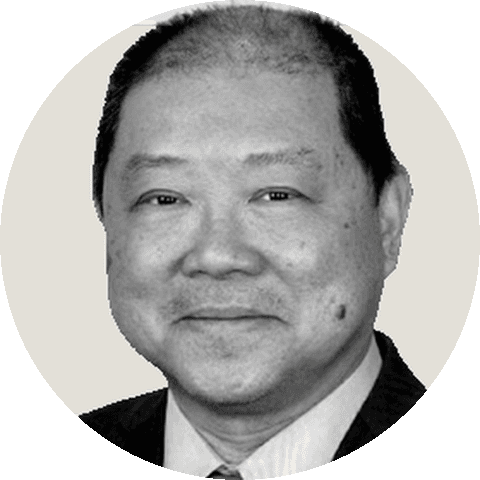
Founder and President of Spectra Tech Inc., a nuclear services firm based in Oak Ridge, TN with ~350 employees across multiple DOE sites and national laboratories. Ph.D. Nuclear Engineering, University of Tennessee, under Dr. Bernard Spinrad (inventor of the Molten Salt Reactor Experiment). Direct thorium fuel cycle experience, including five years at ORNL Building 3019 (the U-233 repository), and Fort St. Vrain spent-fuel management for DOE since 2016.

Young Hwang, Co-Founder & Chief Executive Officer
Young Hwang
Co-Founder & Chief Executive Officer

Co-architected the Tesseract simulation platform and helped originate the company's strategic direction. Leads federal engagement and long-term platform positioning. Over two decades prior in institutional markets, including senior roles at RBC Capital Markets and CIBC World Markets. Co-founded the company around a simple conviction: the future of nuclear will belong to platforms that solve for industrial heat, fuel resilience, and energy sovereignty, not electricity alone.


Craig Sellers, Head of Engineering
Craig Sellers
Head of Engineering

Former Chief Nuclear Engineer and VP, Engineering and Modifications at Ontario Power Generation. Led nuclear engineering, major modification programs, and new-build technical strategy across one of North America's most demanding fleet environments. Deep experience in reactor design, core physics, refurbishment, life extension, and modernization of critical nuclear systems.

Mike Whang, Co-Architect, Tesseract Platform
Mike Whang
Co-Architect, Tesseract Platform

Helped design and build the company's internal simulation and development environment, spanning reactor engineering workflow, Monte Carlo simulation integration, data architecture, and regulatory compliance automation. Central role implementing and refining the computational platform that underpins Thorium Atomics' technical strategy.

Soo-Whan Kim, Chief Financial Officer
Soo-Whan Kim
Chief Financial Officer

15+ years of public-company finance experience across mining, precious metals, and energy. Director of Treasury & Planning at Americas Gold and Silver for nearly a decade; CFO and corporate controller roles at multiple TSX-listed uranium and resource companies including IsoEnergy, Premier American Uranium, and Western Metallica. Founder of Numbers First Inc.

Paul Hardy, Co-Founder & Director
Paul Hardy
Co-Founder & Director

Capital markets strategist with 30+ years driving growth across public and private companies. Previously Managing Director and Head of Institutional Equity Sales & Trading at Desjardins Securities. Central to the company's formation and early-stage capital strategy.

Prit Singh, Board Director
Prit Singh
Board Director

15 years in capital markets and corporate development. Founder of Thesis Capital, a Canadian merchant bank. Entrepreneur with a track record of founding, scaling, and exiting ventures in the technology sector. Advises and finances growth-stage companies and provides strategic transaction expertise and go-public strategies in the North American markets.

Advisors

Dr. Kenneth Ricci, Reactor Physics Advisor
Dr. Kenneth Ricci
Reactor Physics Advisor

PhD Physics, Stanford. Thorium breeder modeling and Monte Carlo neutronics. Published in Nuclear Technology. Fusion neutron source development at Adelphi Technology.

Dr. Tarak Woddi, Reactor Physics Advisor
Dr. Tarak Woddi
Reactor Physics Advisor

PhD Nuclear Engineering, Texas A&M. Licensed CANDU reactor operator. Thorium breeder reactor design and fuel cycle modeling. PRA across 11 nuclear power plants.

Mark Hoffman, Nuclear Safety Advisor
Mark Hoffman
Nuclear Safety Advisor

Westinghouse safety advisor for AP1000. Senior Reactor Operator, Braidwood & AP1000. 19 years at Exelon; thermal-hydraulics and accident analysis.

12
Heimdall Intelligence

Fission Brief.

Daily intelligence on the global nuclear industry.

Policy, capital, technology, and geopolitics. From the team building North America’s thorium future. Delivered weekdays at 6:30 AM ET.

Weekdays · 06:30 ET · Curated, not aggregated